Textile evidence matters because it lets the Shroud be treated first as cloth rather than as icon. Before one asks how the image formed, one can ask a simpler set of questions: what sort of linen is this, how complex is its construction, what published parallels exist, and how well does it fit the burial textiles actually recovered from Roman-period Judaea?
That is a narrower question than authenticity in the full sense, but it is a useful one. The Shroud may remain historically important whatever one thinks about the image. The textile question is whether the cloth itself behaves like a first-century Jerusalem burial shroud, or like something else.

What the cloth is
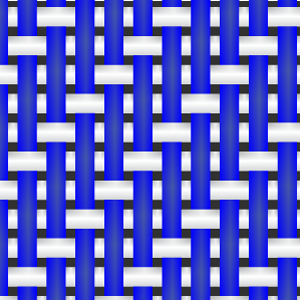
The Shroud is a linen cloth about 4.4 by 1.1 metres, woven in a 3:1 chevron twill often described as herringbone. Gilbert Raes and Gabriel Vial both described single Z-spun yarns in warp and weft. Raes also reported a two-ply S-twist sewing thread in the seam joining the main cloth to the narrow side strip.
Those details matter because they describe a specific textile profile, not just a large sheet of linen. Vial’s measurements placed the cloth at about 38 warp threads and 26 weft threads per centimetre, denser and more technically controlled than the ordinary burial linens usually recovered from Roman-period Judaea. He also emphasized the side strip, the seam, the faults of weaving, and the internal regularity of the cloth as technical evidence in their own right.
The strongest point here is not mystical. It is simply that the Shroud is not a generic burial sheet. It is a distinctive fabric whose combination of material, spin, weave, density, and construction has to be compared against real textile corpora. Once that comparison is made, the first-century Jerusalem claim stops looking ordinary.

No known ancient parallels in the published record
The core textile claim is not merely that the Shroud is unusual. It is that no known ancient parallels have been identified in the published record, while later European comparanda are easier to find.
Gabriel Vial on ancient comparanda
Vial examined the cloth directly during the 1988 radiocarbon sampling and reviewed the ancient examples often mentioned in Shroud discussions. His conclusion was not that ancient twills did not exist. It was that the published examples from places such as Pompeii, Antinoe, Palmyra, Cologne, and Dura-Europos were structurally different from the Shroud, usually 2:2 twills rather than 3:1, and often wool or silk rather than linen.
That is a narrower but more important point than the rhetoric sometimes built on it. The textile problem is not “ancient versus medieval” in the abstract. It is that the specific profile of the Shroud does not find a close published ancient match.
Orit Shamir on the Land of Israel
The strongest regional comparison set for a first-century Jerusalem burial cloth is the excavated textile record from the Land of Israel. Orit Shamir’s 2015 study is especially valuable because it places the Turin cloth against that local corpus directly. Her contrast is stark:
| Feature | Turin Shroud | Roman-period textiles from the Land of Israel |
|---|---|---|
| Fiber | Linen | Linen common in burial shrouds; wool also present in the wider textile record |
| Spin | Z-spun warp and weft | Local Roman-period linens are characteristically S-spun |
| Weave | 3:1 chevron twill | Burial linens are usually plain weave or basket weave |
| Thread density | About 38 warp / 26 weft per cm | Commonly lower counts in local linen shrouds |
| Structure | Main cloth plus narrow side strip | Excavated shrouds are generally simpler in construction |
First-century Palestine used warp-weighted looms and two-beam upright looms. In the published archaeological record of the Land of Israel, linen textiles are consistently S-spun plain-weave tabbies, and Orit Shamir notes that twill-capable three-heddle looms were not in use in Israel. No textile matching the Shroud’s weave has been found in the Land of Israel.
The Shroud is different. Its fabric is a Z-spun linen woven in a 3:1 herringbone twill, a structure requiring a loom setup with at least four shafts or heddles. Early multi-shaft loom technology is archaeologically documented in Han China, where it was used for silk pattern weaving, and Zhao et al. note that this technology was not known in the West until a millennium later. Whatever one makes of theoretical possibilities, no evidence places a textile of the Shroud’s type in first-century Judaea.
That also closes the common import objection. Twills do appear in the wider regional record, but they are uncommon, usually wool, and treated as imports rather than the normal local linen profile. No known ancient textile from any region matches the Shroud’s full combination of linen, Z-spin, and 3:1 herringbone twill. In other words, every major textile marker points the wrong way for an ordinary Jerusalem burial shroud: spin, weave, density, and construction.
Jerzy Maik on archaeological caution
Jerzy Maik made the same point from another direction. He argued that many popular “ancient herringbone” parallels are not really parallels at all, because they turn out to be 2:2 twills or other textiles in different fibres. His judgment was that no similar textile from ancient times had been securely identified. At the same time, he noted medieval examples with much closer structural resemblance.
The Akeldama comparison
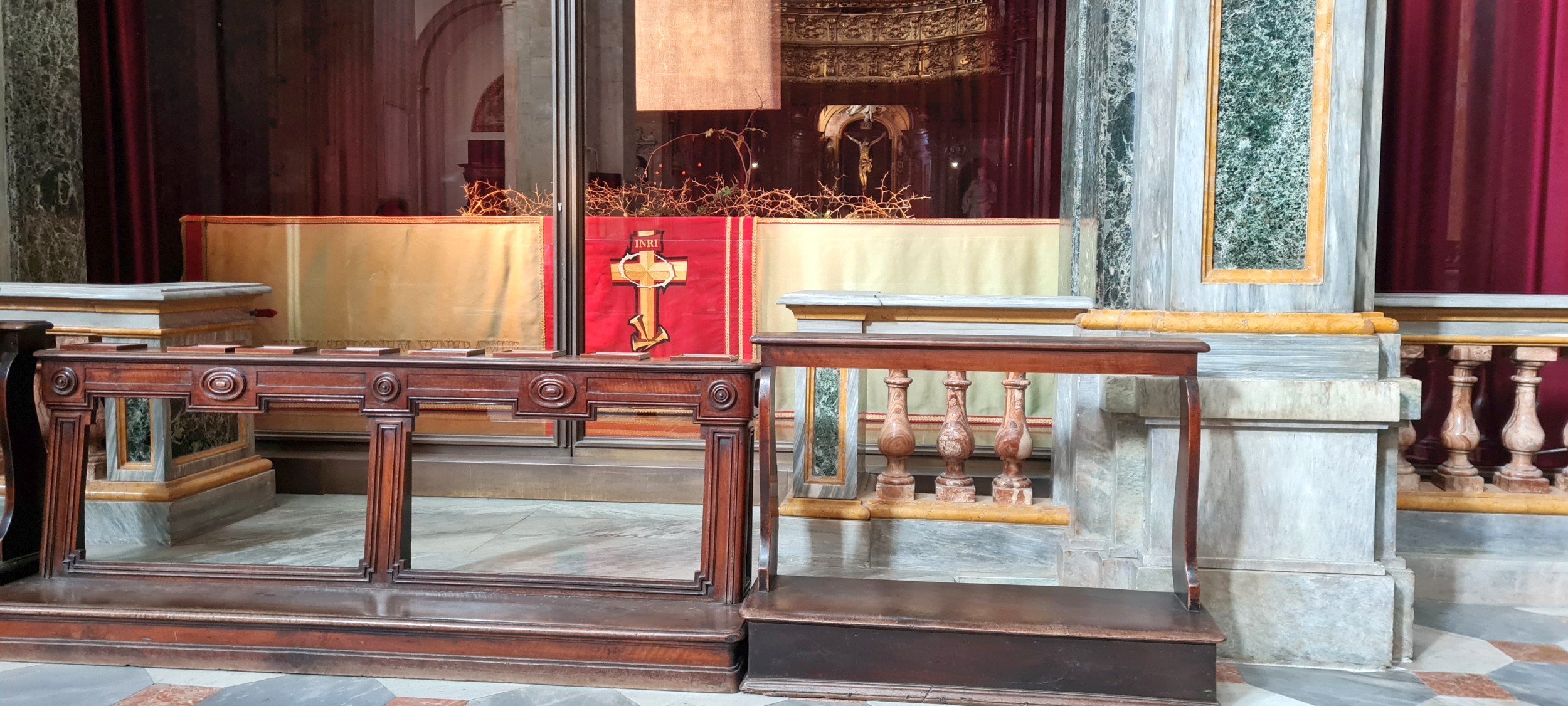
The Akeldama or Tomb of the Shroud discovery matters because it gives us something rare: the only known excavated first-century burial shroud from Jerusalem. That makes it a far better comparator than speculation about what a first-century shroud “might” have looked like.
The preserved textile remains from Akeldama are unlike the Turin cloth. Shamir describes the burial assemblage as involving wool and linen components, simple weave construction, and additional textile remains around the head area. However one phrases the details, the contrast is plain: the excavated Jerusalem burial textile is simpler, more local in profile, and less exotic than the Turin cloth.
One excavated burial assemblage does not define every burial ever carried out in first-century Jerusalem. But it does show what an actual comparator from the right place and period looks like, and it does not look like Turin.
Side-by-side comparison
| Feature | Akeldama burial assemblage | Turin Shroud |
|---|---|---|
| Date and context | Excavated in Jerusalem; late Second Temple / early first-century burial context | Sampled cloth dated 1260-1390 CE in the 1989 Nature study; first documented in fourteenth-century France |
| Fibre profile | Wool and linen components reported | Linen only |
| Weave | Simple weave textile | 3:1 chevron twill |
| Construction | More than one textile component, including head-area remains | Single long cloth with side strip |
| General fit | Sits comfortably inside the local archaeological world | Sits awkwardly beside the local textile corpus |
Tabor presses the comparison further and, on this point, the argument is strong. John 20:5-7 describes multiple burial cloths and a separate head-cloth. The Akeldama burial assemblage, with layered textiles and distinct head-area remains, matches that description far better than the Turin Shroud does. The Turin cloth is a single continuous length with no separate head-cloth component. On that Gospel comparison, Akeldama fits; Turin does not.
Every known published structural match is medieval European or later
Once the comparison moves beyond ancient Judaea, the picture changes sharply. The published structural parallels begin to cluster in later European contexts rather than in the ancient world.
Later linen canvas
Vial noted a later linen comparison in the canvas of a sixteenth-century painting from Herentals. That does not prove the Shroud is painted, and it does not establish identity of use. It does show that the textile family under discussion exists comfortably in later European workshop contexts.
Clerical textiles
Donald King responded to Vial by publishing two Victoria and Albert Museum fragments from a stole or maniple, probably from the second half of the fourteenth century. They are undyed Z-spun linen in 3:1 chevron twill: not identical to Turin, but plainly part of the same broad textile family. In the specialist textile literature cited here, they are the earliest published examples of that combination. That shows 3:1 herringbone twill linen was being used for church clergy clothing in the same broad period and cultural setting in which the Shroud first appears historically.
Medieval archaeological finds
Maik also pointed to medieval finds from Wroclaw and Elblag with matching or near-matching herringbone structure in other fibres. Taken together, these later examples do not prove a single place of origin. They do, however, shift the centre of gravity. The usable published structural matches are medieval European or later, not ancient and Judaean.
Master comparison table
Consolidated from the textile sources discussed in this article.
| Item | Date | Fiber | Spin | Weave | Function / context |
|---|---|---|---|---|---|
| Shroud of Turin | C14: 1260-1390 CE | Linen | Z-spun | 3:1 chevron twill | Displayed as a burial relic |
| Akeldama burial assemblage | Late Second Temple / early first-century Jerusalem burial context | Wool and linen components | Not reported as Z-spun linen twill | Simple weave textile | Excavated burial assemblage in situ |
| V&A stole / maniple fragments | Second half of the fourteenth century | Linen | Z-spun | 3:1 chevron twill | Clerical vestment fragments |
| Herentals canvas | Second half of the sixteenth century | Linen | Not stated | 3:1 chevron twill | Painting canvas |
| Wroclaw find | Thirteenth to fifteenth century | Hemp | Not stated | Herringbone structure | Archaeological textile |
| Elblag find | Late fifteenth century | Wool | Not stated | Herringbone structure | Archaeological textile |
| Land of Israel linen corpus | Roman period through the medieval record discussed by Shamir | Linen | S-spun | Plain tabby / basket weave | Burial shrouds and wider textile use |
| Pompeii, Antinoe, Palmyra, Cologne, Dura-Europos | Ancient | Often wool or silk | Various | Usually 2:2 twills or other structures | Ancient comparanda reviewed by Vial |
The seam and the limits of certainty
The strongest counterweight to an overly confident medieval reading comes from Mechthild Flury-Lemberg. In her 2001 study, she argued that the seam joining the side strip to the main cloth resembles seams found among the textiles from Masada, and she concluded that nothing in the Shroud’s weaving or sewing techniques speaks against production as a high-quality textile in the first century.
That is a serious point and should not be brushed aside. It shows that not all textile specialists read the object in the same way, and it warns against turning absence of a parallel into proof of impossibility.
But the seam does not end the matter either. Shamir notes that such seams are not confined to Roman-period textiles alone and cites later examples as well. The seam therefore belongs in the file as one piece of evidence, not as a trump card capable of cancelling the wider textile picture.
The same restraint applies more broadly. Three things can be true at once:
- The Shroud’s textile profile does not look like the ordinary linen burial shrouds excavated from the Land of Israel.
- Published later parallels are easier to cite than securely ancient linen parallels.
- Textile analysis alone is not a laboratory dating method.
That last point matters because the Shroud has a separate radiocarbon history. The 1989 Nature paper dated the tested sample to the medieval period, and it also acknowledged a telling practical detail: the Shroud’s distinctive three-to-one herringbone twill could not be matched in the control fabrics, making it possible for laboratories to identify the sample. One may debate sample representativeness, repair, or contamination, but those are arguments about radiocarbon sampling. They do not remove the textile problem.
What the textile evidence means
Taken together, the textile evidence does not merely fail to confirm a first-century Jerusalem origin. It points away from one.
The cloth’s weave, spin, density, and construction do not match the burial textiles excavated from Roman-period Judaea. The Akeldama comparator looks markedly different. The closest published structural parallels are later and European, including liturgical fragments, painting canvas, and medieval archaeological finds.
That does not mean textile analysis alone can date the cloth with laboratory precision, and it does not mean every claim made for medieval manufacture is equally strong. Raes was right to warn against overstatement, and Flury-Lemberg was right to insist that the object cannot be dismissed by slogan. But the overall direction of the evidence is still clear enough to say something firm: the Shroud is not neutral textile evidence equally at home in first-century Jerusalem and late-medieval Europe.
On textile grounds, the cloth is not an unexplained anomaly. It fits the profile of a medieval European linen better than a first-century Jerusalem burial textile. That is the finding the textile evidence communicates most consistently, even after its uncertainties are allowed for.